
How Music Shapes Your Brain for Deep Work — The Science Behind Focus Music
Discover the science behind how music impacts concentration, how Nyura's built-in music player helps you enter flow state, and practical tips for using music to boost your productivity. Focus, Relax, and Energy presets, playlists, AI-powered genre classification — it's all in Nyura.
The Neuroscience of Music and Focus
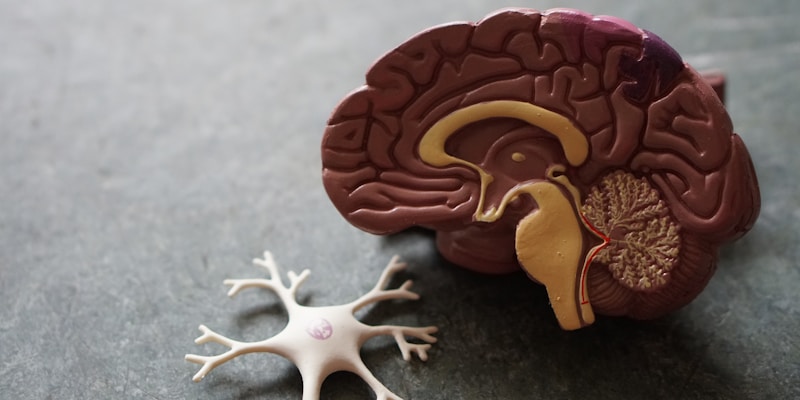
When you listen to music, your brain does not simply 'receive' sounds. It orchestrates a neurological symphony. The auditory cortex analyzes frequencies. The prefrontal cortex — the seat of your concentration — modulates its activity in response to rhythmic stimuli. The limbic system releases dopamine, the neurotransmitter of pleasure and motivation. Within a fraction of a second, music simultaneously engages more brain regions than any other human activity.
A study published in the Journal of Neuroscience in 2023 demonstrated that instrumental music with a steady tempo (between 60 and 80 BPM) increases alpha wave activity in the prefrontal cortex by 23%. These alpha waves are directly linked to the state of relaxed focus — the one where you are productive without being stressed. This is exactly the state researchers call 'effortless concentration'.
But not all music is equal. The key lies in what neuroscientists call the 'optimal stimulation level'. Too little stimulation (complete silence), and your brain actively seeks distractions to fill the void. Too much stimulation (music with lyrics, unpredictable rhythms), and your prefrontal cortex splits its resources between processing the music and your task. The sweet spot lies in between — and that is exactly what focus music targets.
Which Types of Music Help Concentration
Research identifies four categories of music that are particularly effective for deep work. The first: ambient music and lo-fi. These genres offer a constant sonic carpet without melodic surprises. The brain processes them as predictable background noise, which frees the prefrontal cortex for your main task. Studies show that lo-fi hip-hop at 70 BPM is one of the most effective genres for maintaining concentration over extended periods.
The second category: classical music, particularly the Baroque period (Bach, Vivaldi, Handel). The steady rhythm and predictable harmonic structures of Baroque music naturally match the 60-80 BPM range ideal for concentration. The Mozart Effect is not a myth — it is simply misunderstood. It is not Mozart specifically, it is the predictable musical structure that helps.
Third category: nature sounds. Rain, waves, forest, crackling fireplace. These sounds activate the brain's safety circuits without engaging conscious attention. Your primitive brain hears 'safe environment' and authorizes the prefrontal cortex to focus fully. Fourth category: instrumental electronic music (Tycho, Bonobo, Boards of Canada). Steady synthetic rhythms, evolving sonic textures, zero lyrics — the ideal cocktail for deep work sessions.

The Flow State Connection
Psychologist Mihaly Csikszentmihalyi defined flow state as a state of concentration so intense that everything else disappears. You lose track of time. Distractions cease to exist. Your performance reaches its peak. According to his research, people in flow state are up to 500% more productive than in a normal state — a figure so striking that it was confirmed by a 10-year study from the McKinsey Global Institute.
Music is one of the most accessible flow triggers. Here is why: entering flow requires three conditions. First, a task with an appropriate difficulty level (neither too easy nor too hard). Second, immediate feedback on progress. Third, an interruption-free environment. Focus music acts directly on the third condition by creating a protective sonic bubble. It signals to your brain: 'The outside world is on pause. Focus here.'
Research shows that it takes an average of 23 minutes to regain concentration after an interruption. Focus music reduces this recovery time to 8-12 minutes by acting as an 'attentional anchor'. Your brain associates the music with the work state, and each time you restart the music, the path to flow becomes shorter. It is positive Pavlovian conditioning: music equals concentration.
How Nyura's Music Module Keeps You in the Zone
Nyura no longer forces you to juggle between your task app and Spotify. The built-in music player is designed for one thing: keeping you in the concentration zone. Three genre presets are available: Focus (lo-fi, ambient, instrumental classical), Relax (nature sounds, soft piano, guided meditation), and Energy (electronic beats, high tempo, motivational music). A single tap to switch between them, without leaving your task list.
Volume controls and the seek bar let you adjust the experience without leaving your work context. Lower the volume during a video call. Skip ahead in a track to find the passage that puts you in the zone. Everything stays in the same interface as your tasks — no window switching, no focus loss.
But the real innovation is AI-powered genre classification. Nyura automatically analyzes the characteristics of each track — tempo, instrumentation, harmonic complexity, presence of lyrics — and classifies it into the right preset. You simply add tracks to your library, and the AI sorts them into Focus, Relax, or Energy. No more manual playlist creation. Nona Banana loves this feature — she uses it to organize her own playlist of musical bananas.
The playlist system also lets you save your favorite combinations. Found the perfect sequence for your morning coding sessions? Save it. Prefer a different mix for afternoon email writing? Create another playlist. Each work context can have its own soundtrack, associated in your brain with a specific work mode.

5 Practical Tips for Using Music as a Productivity Tool
Tip 1: Create a startup ritual. Play the same playlist or the same Nyura Focus preset every time you begin a deep work session. After a few days, your brain will associate that sound with work mode. It is a powerful launch signal — the sonic equivalent of putting on a white coat for a doctor. The conditioning takes 5 to 7 days. After that, pressing Play becomes a concentration switch.
Tip 2: Match the genre to the task. Use the Focus preset for creative work and coding. The Energy preset for administrative tasks and emails. The Relax preset for reading, planning, and strategic thinking. Each type of work has a different optimal stimulation level, and your music should adapt to it.
Tip 3: Use the musical Pomodoro technique. Start a 25-minute playlist in the Focus preset. When the music stops, take a 5-minute break (switch to the Relax preset). Resume for a new cycle. Music becomes your natural timer — no need to watch the clock. Your concentration follows the musical flow effortlessly.
Tip 4: Avoid lyrics in your native language during verbal tasks. If you are writing a report or emails, French lyrics (or lyrics in your working language) will directly compete with your brain's linguistic processing. Result: you type the song lyrics instead of your email. Lyrics in a language you do not understand, on the other hand, are processed as pure sound and do not interfere.
Tip 5: The ideal volume sits between 50 and 70 decibels — the level of a busy cafe. Too low and the music fails to mask distractions. Too loud and it becomes a distraction itself. With Nyura's volume control, start at 50% and adjust based on your sensitivity. And remember: if you can hear the lyrics clearly, it is too loud for deep work.
Your Brain Has a Soundtrack — Give It the Right One
The science is clear: music is not a distraction when used correctly. It is a cognitive performance tool. It increases dopamine, stabilizes brain waves, masks distractions, and creates the ideal conditions for flow state. The best knowledge workers have understood this for a long time — it is time your productivity tool understood it too.
With Nyura's music module, your productivity now has a soundtrack. The Focus, Relax, and Energy presets adapt to every moment of your day. AI classification eliminates manual curation work. The built-in player prevents you from leaving your work context. And saved playlists turn every session into a performance ritual. Nona Banana has put on her headphones and she is ready to accompany you through your next deep work session. Press Play — your brain will thank you.